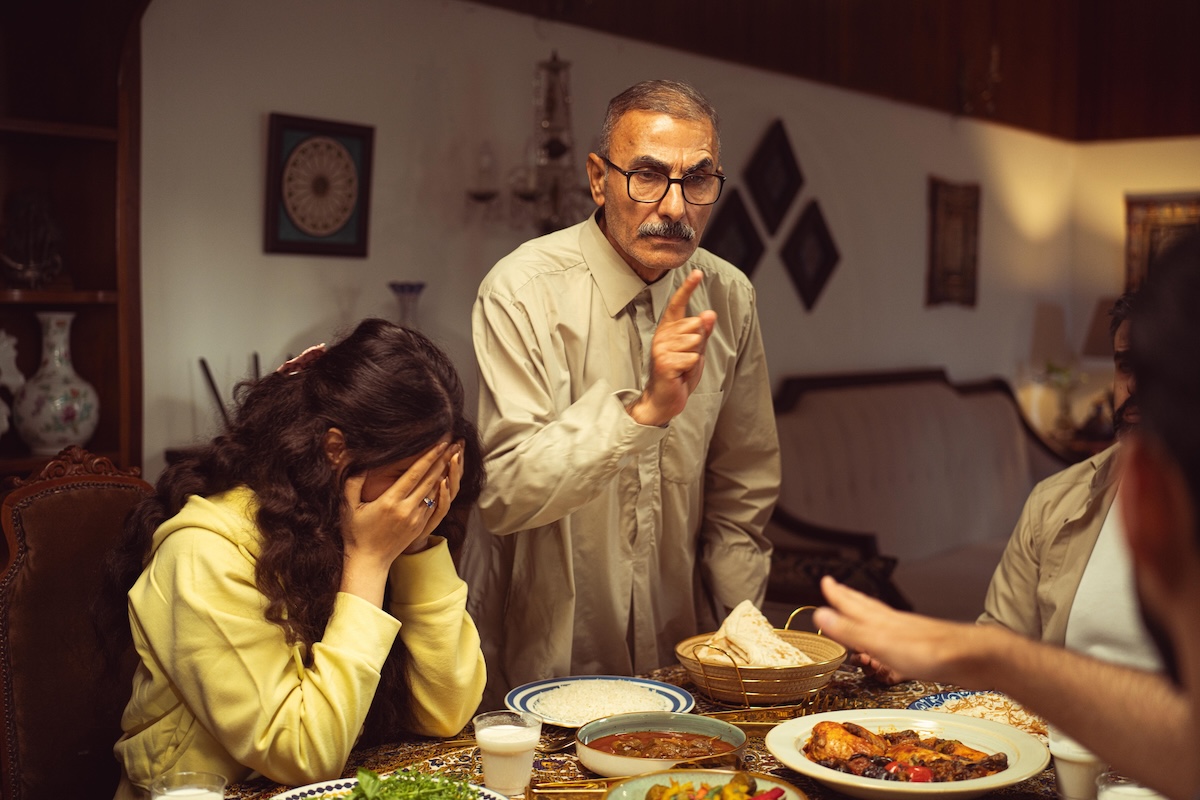
In Part I of this series, I wrote about betrayal in its most general form — how it doesn’t just break our trust in the person who hurt us, but our trust in our own judgment. In Part II, I turned to the type of betrayal that draws the most attention: the affair, the broken romantic promise. Here, in this final installment, I want to turn to betrayal in family relationships, something I encounter constantly in my practice, though it gets far less airtime — the betrayal that erupts inside families, almost always at the exact moment a family can least afford it.
What is the most likely event to evoke a betrayal within a family? It is when the parents die or have become too feeble and dependent to lead the family.
An attorney who manages estates once said to me, “It’s not 50% of the time, not 75%, not 90 or 99% of the time…it’s 100% of the time that when estates are settled after the death of parents, their children have conflict.” That struck me as a disturbing concept. He operates from a legal perspective; I see the psychological fallout. While I don’t have my own statistic, I would certainly agree that an enormous number of relationships are torn apart over the settlement of family estates. The question is why. What surfaces in these situations that causes such strife?
I will leave the legal complications to the lawyers to explain and address the psychological aspects myself. Unfortunately, even in the closest of sibling relationships, there is often some degree of sibling rivalry. Parents don’t — can’t, in fact — treat all of their children the same. Even if they could, it would not be received the same way, because individual children have unique needs, and identical treatment lands differently on different temperaments.
This leaves the children with differing experiences of their parents. Typically, this is translated in children’s minds into measures of attention, love, and caring. When a given child compares this to what they observe in their siblings, depending on the family dynamics, resentments — or, conversely, a sense of superiority — may arise. This conceptually sows the seeds of betrayal, as the now-adult child develops an entitlement based on the real or perceived childhood inequities.
I have seen countless people embroiled in horrendous disputes throughout the probate process after the death of a parent. These disputes appear to be over possessions, real estate, or finances that belonged to the parents, but if one delves deeper, they are really about family dynamics.
It is typically one sibling — carrying the real or perceived inequities of childhood, and now, in the absence of the parents, feeling entitled to what they believe they either deserve or were previously cheated out of — who begins to seek power and control, using that belief in their own entitlement as a rationale to acquire what they desire. Too often, this sibling resorts to devious and dishonest methods to do so, at the expense of a brother or sister who never saw it coming. The resulting experience of betrayal, for the sibling on the receiving end, can be devastating.
This sort of betrayal hits like a thunderbolt for several reasons. One is the timing. This is a period when a family is exceptionally vulnerable. If a parent is ailing, the children are struggling with the reversal of roles between child and parent. There is the heartache and adaptation that accompanies watching a parent deteriorate and facing their impending demise. Siblings typically foresee this as a time when the family will come together, offering mutual support and comfort. Instead, they find themselves facing a breach at the exact moment their emotional energy has been most exhausted.
Just as the relationship between parent and child is changing so drastically, the relationship between siblings is undergoing a seismic shift of its own. What one viewed as a trusted partner is now frighteningly suspect. How does one rewrite all that they believed about someone as present in their life as a sibling? Everything — not just the current circumstances — comes under examination, as a person begins to question events, emotions, and decisions made historically.
As I wrote in Part I, betrayal of any kind turns us back on ourselves as much as it turns us against the person who hurt us — it makes us question our own judgment, not just theirs. With a sibling, that self-questioning cuts in its own particular way, because there is no comfortable story about being fooled by a stranger. You are left asking how you misjudged someone you have known since before either of you could walk.
Finally, this is so difficult because one doesn’t know how to proceed. A whole new dynamic has formed — one with no history, no pathway, no instinct for how to interact with this old and familiar, yet completely new and unknown, entity that was once a beloved family member. The force of the blow of the betrayal is dizzying.
And yet the path forward is not fundamentally different from the one I described earlier in this series. It still asks for understanding — of what each of you brought into this family long before any will was read. It still asks for the hard work of forgiving ourselves for what we did not see coming.
And it still asks the question every betrayal eventually asks: whether we let this loss define us as victims, or find, even here, something to learn about who we are and who we are willing to become. Family may be the relationship we least expect to need saving from. It is also, I have found, one worth trying to save — or, when it cannot be saved, one in most need of grieving.